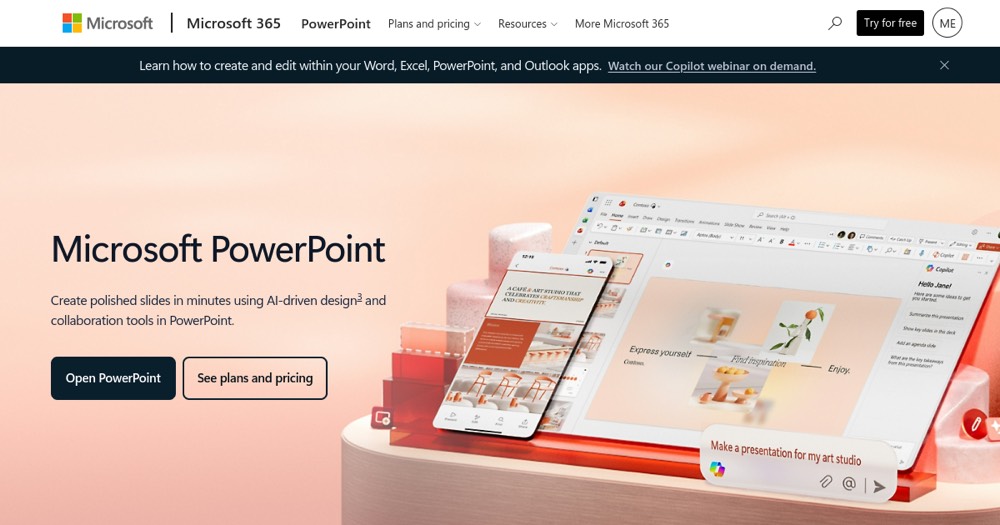
PowerPoint remains the reference for professional, universally compatible presentations; for rare and simple use, a free web tool is enough.
About
In practice. What you can do with Microsoft PowerPoint.
Microsoft's presentation software for building slides, part of the Microsoft 365 suite, with templates, animations, collaboration and design assistance tools.
Practical uses
Prepare a client presentation.
Build training material.
Create a professional pitch deck.
Features & use cases
Presentation client
Templates
Collaboration
Pros and cons. What Microsoft PowerPoint does well, and what to expect.
Pros
De facto standard, universally compatible format.
Rich templates, animations and tools.
Real-time collaboration via Microsoft 365.
Free web version available.
Cons
Full features behind a subscription.
Can feel heavy for simple needs.
Microsoft-centric ecosystem.
When it makes sense. Keep Microsoft PowerPoint, or challenge it?
Keep if
You regularly create professional presentations.
You already work in the Microsoft 365 ecosystem.
Microsoft PowerPoint becomes worthwhile when
+You use it at least once a week
+The monthly cost ($7) is small next to the time it saves you
Challenge if
You only make rare, very simple presentations.
You prefer a natively collaborative web presentation tool.
Microsoft PowerPoint becomes too expensive when
−You use it less than once a month
−A simple free version or a tool already in your stack would do
Our verdict. What to know about Microsoft PowerPoint.
Why this verdict
Average
Microsoft PowerPoint is fairly easy to replace with an alternative, no free tier to test before paying, clearly documented use cases.