Budget at least $50/month (Lead Tracking) as the entry cost; add $45/month more ($95 total) for form tracking and multi-touch attribution.
1 / 2
About
In practice. What you can do with CallRail.
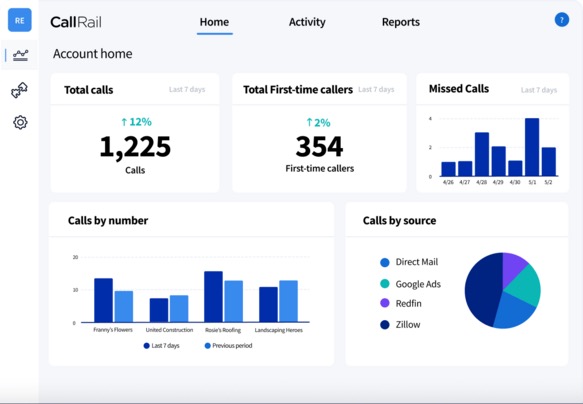
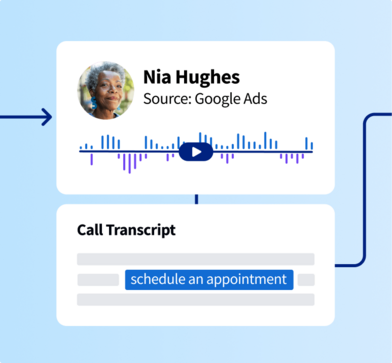
CallRail uses dynamic number insertion to attribute inbound calls to the marketing channel that generated them, then layers on call recording, transcription and AI-driven sentiment and conversation analysis on higher tiers. Form tracking and multi-touch attribution join calls to the rest of the funnel on the Complete plans.
Lead Tracking starts at $50/month with 5 local numbers, 250 minutes and 25 SMS included; form tracking and conversation intelligence require upgrading to $95/month (Lead Tracking Complete) or $150+/month (Lead Conversion). Usage beyond the included allotment is billed separately (extra minutes, numbers, SMS, form submissions), so cost can climb quickly for busier accounts. It suits a marketing-focused small team that needs to prove which channels drive calls, more than a solo freelancer.
Practical uses
UsageA marketing agency assigns a unique tracked number to each ad campaign, so a client can see exactly which ad generated an inbound call.
UsageA sales manager on Lead Conversion reviews AI sentiment analysis on recorded calls to spot which reps need coaching.
Features & use cases
Call tracking
Marketing attribution
Phone analytics
Pros and cons. What CallRail does well, and what to expect.
Pros
Dynamic number insertion attributes calls to the exact marketing source without manual tracking.
Public API with a free tier up to 1,500 calls/month for lightweight integrations.
Cons
Entry plan excludes form tracking and conversation-intelligence features, which require upgrading to a pricier tier.
Included usage (minutes, numbers, SMS) is modest, and overage fees apply quickly beyond the base allotment.
When it makes sense. Keep CallRail, or challenge it?
Keep if
You run marketing campaigns and need to prove which channel (ad, page, campaign) drives a specific phone call.
CallRail becomes worthwhile when
+You use it at least once a week
+The monthly cost ($50) is small next to the time it saves you
Challenge if
You just need a business phone line without per-call attribution; a plain phone system will cost less.
CallRail becomes too expensive when
−You use it less than once a month
−A simple free version or a tool already in your stack would do
Our verdict. What to know about CallRail.
Why this verdict
Average
Added value
The $50/month entry plan is reasonable, but form tracking and conversation intelligence require upgrading, and overage fees on minutes, numbers and SMS can add up quickly for an active account.
Simplicity
Neutral score: onboarding time and ease of first setup are not covered by the collected sources.
Fit for purpose
Dynamic number insertion attributes calls to marketing sources as described, and higher tiers deliver recording, transcription and sentiment analysis without a reported workaround.
Performance
Combining call tracking, AI sentiment analysis, form tracking and multi-touch attribution in one tool covers more ground than a single-purpose call tracker.
Reversibility
Neutral score: data export formats and portability of call/attribution history if you leave CallRail are not covered by the collected sources.