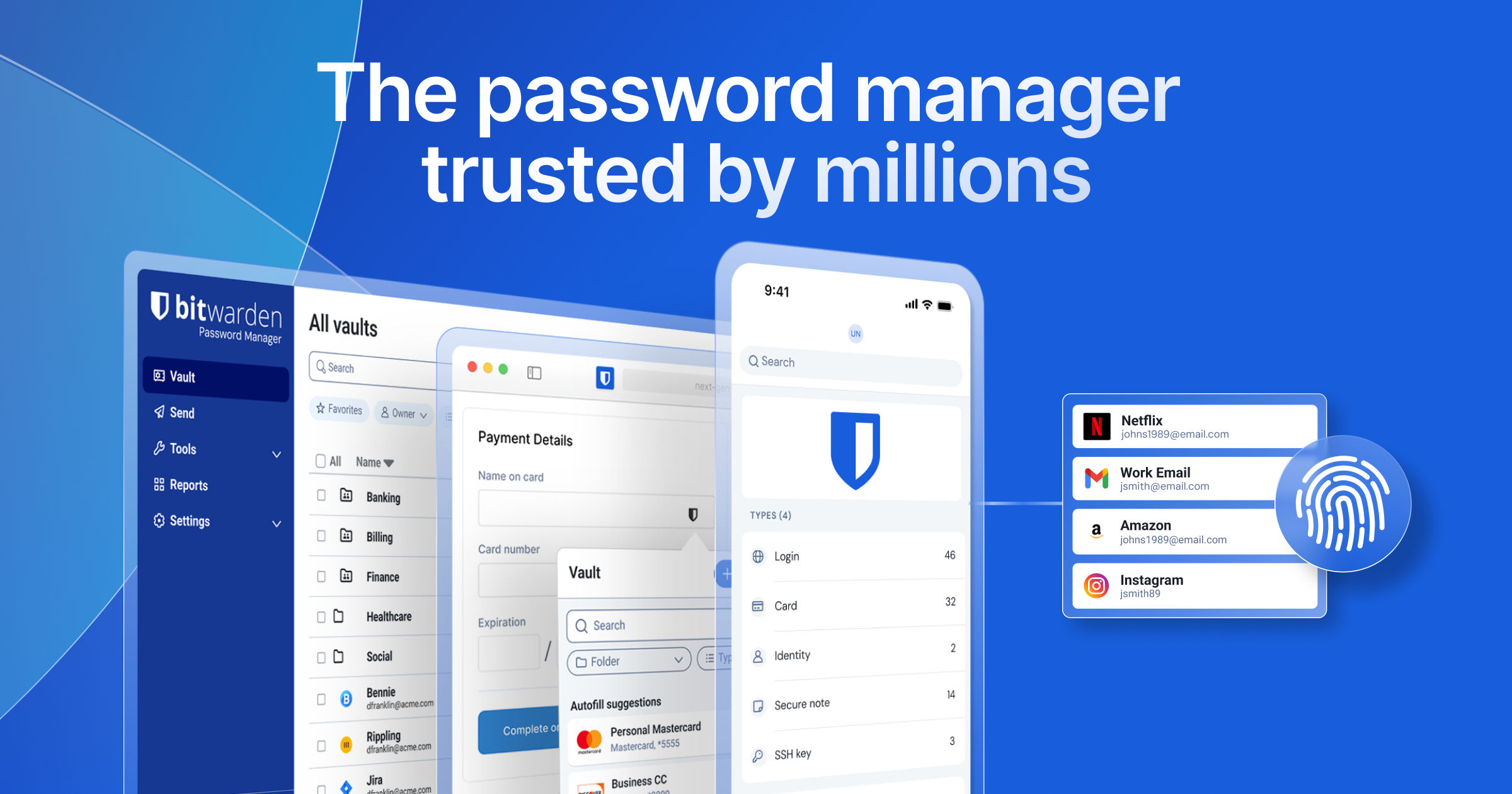
Bitwarden fits teams and enterprises valuing open-source and data control; for very basic free use, simpler alternatives exist.
About
In practice. What you can do with Bitwarden.
Bitwarden is the reference open-source password manager: verifiable source code, end-to-end encryption, and an already very complete free version (unlimited passwords, sync across all devices). It's the most-cited alternative to 1Password for anyone who wants equivalent security without paying.
For a freelancer or small team, the free plan largely covers basic needs; advanced team sharing and certain security reports require the paid plan, which remains notably cheaper than the competition.
Practical uses
Replace 1Password or LastPassOpen-source solution.
Self-host secrets manager on private infrastructure.
Securely share credentials within DevOps team.
Features & use cases
Security
Pros and cons. What Bitwarden does well, and what to expect.
Pros
Fully open-source and transparent about encryption.
Complete, unlimited free plan for individuals.
Full self-hosting options.
Secure sharing with granular access controls.
Integrated Secrets Manager for devops.
Cons
Self-hosting setup requires technical expertise.
Commercial support less developed than 1Password.
Interface may seem complex for beginners.
When it makes sense. Keep Bitwarden, or challenge it?
Keep if
You want an open-source, trustworthy password manager.
Self-hosting or data control is crucial for you.
Challenge if
You need premium commercial support included.
You prefer a fully managed web interface.
Our verdict. What to know about Bitwarden.
Why this verdict
Average
Bitwarden is fairly easy to replace with an alternative, a free tier to test before paying, clearly documented use cases.