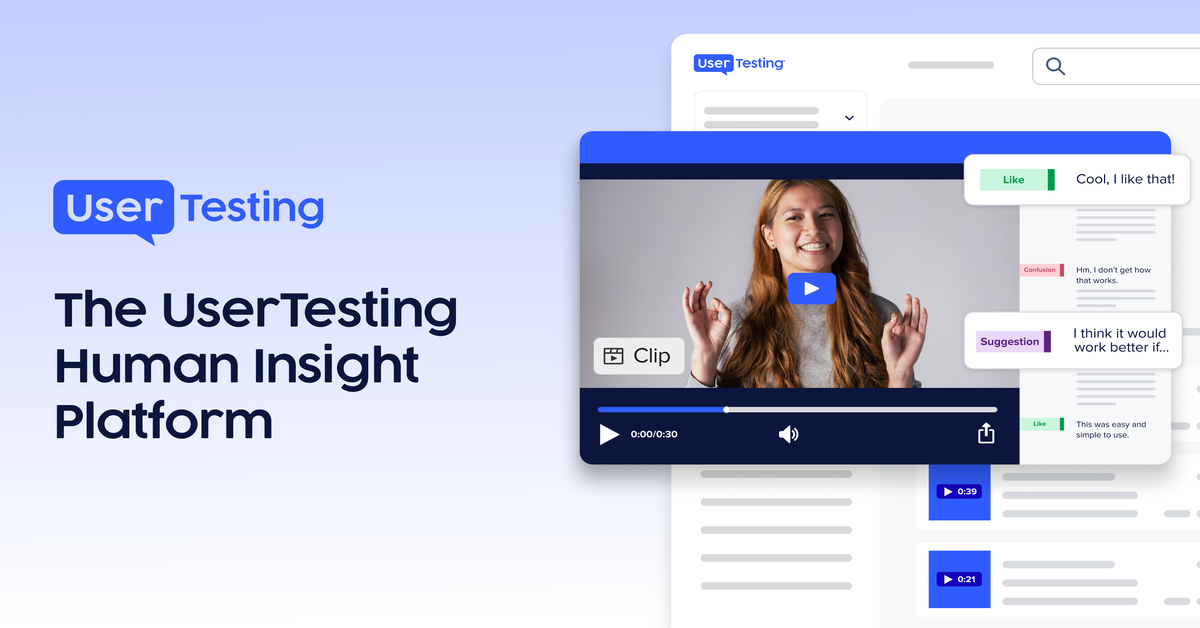
UserTesting works for large organizations seeking a mature, scalable UX research platform; for startups or one-off testing, more accessible alternatives fit better.
About
In practice. What you can do with Usertesting.
UserTesting recruits panels of testers for user testing sessions, moderated or unmoderated, with analytics and integrations into Jira and Slack. It runs on credits purchased upfront under an annual contract.
Annual contracts run from $12,000 to more than $100,000 a year depending on credit volume and the panel used, with an SMB average around $36,000 a year. There is no per-unit pricing and no conventional free trial: everything goes through a custom quote.
For a freelancer or a small business, that budget is out of reach. Lighter alternatives, one-off user tests through per-project platforms or recruiting testers directly, cover the same need at a fraction of the cost.