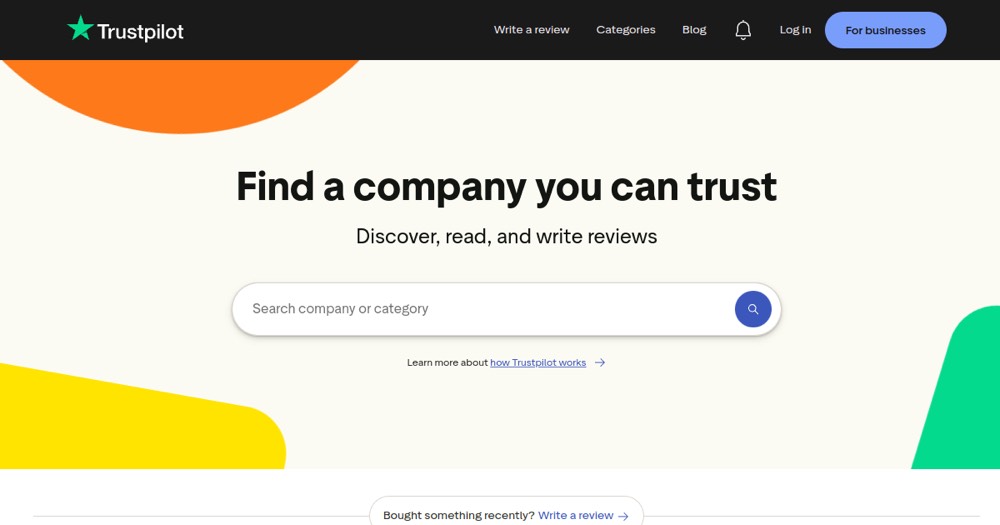
Trustpilot is for companies committed to transparency and reputation management; closed review platforms suit different goals.
About
In practice. What you can do with Trustpilot.
Trustpilot is online review platform for businesses and consumers. Starting at €15/month. Built for e-commerce sellers and SaaS founders.
Specialized in customer reviews, and professional interface. Estimated time saving: 3h/month.
Keep it if: regular use or essential features. Skip it if: occasional use or tight budget. Main limit: price to be verified based on usage. As soon as the tool saves you more than €15/month.
Practical uses
Automatically request reviews after customer transactions.
Build consumer trust by displaying honest reviews.
Respond to critics publicly and show accountability.
Track brand sentiment and reputation changes.
Features & use cases
Customer reviews
Pros and cons. What Trustpilot does well, and what to expect.
Pros
Free, transparent review platform.
Automated review collection via email.
Publicly respond to reviews (shows engagement).
Verified, authentic customer feedback.
Cons
Includes negative reviews (no cherry-picking).
Advanced features (automation, deeper analytics) are paid.
Less customization than proprietary platforms.
Basic analytics in free plan.
When it makes sense. Keep Trustpilot, or challenge it?
Keep if
You want a neutral platform to collect genuine customer reviews.
You're serious about responding to both praise and criticism.
Trustpilot becomes worthwhile when
+You use it at least once a week
+The monthly cost ($15) is small next to the time it saves you
Challenge if
You only want positive reviews displayed.
You prefer a proprietary, closed review system.
Trustpilot becomes too expensive when
−You use it less than once a month
−A simple free version or a tool already in your stack would do
Our verdict. What to know about Trustpilot.
Why this verdict
Great
Trustpilot is fairly easy to replace with an alternative, a free tier to test before paying, clearly documented use cases.