

    My stack

    Relay reviews

    GraphQL framework for React enabling data and component colocation.

    Visit website
    ToolTrim verdict3.6/ 5Average

    Relay shines for massive React applications with GraphQL; choose it for scalability and performance.

    Relay, preview 1
    About

    In practice. What you can do with Relay.

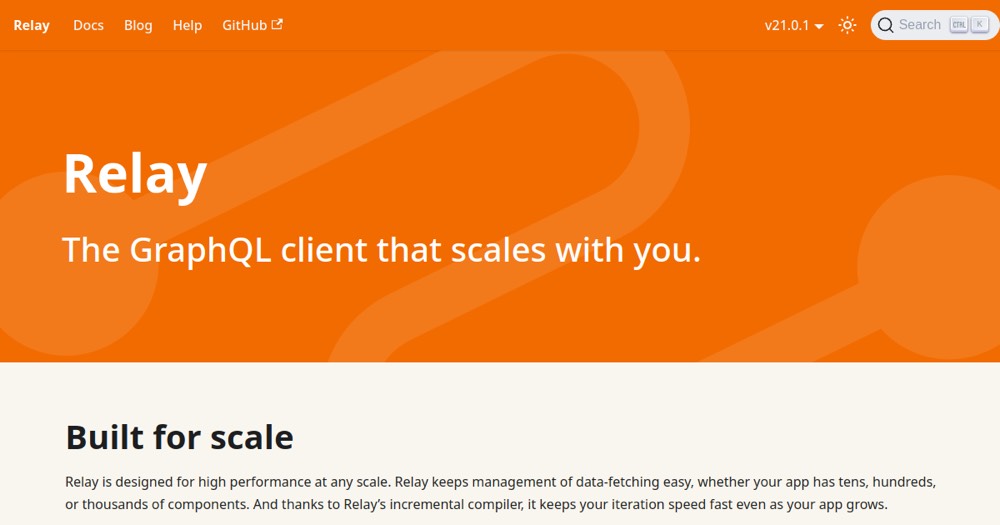
    Relay is Meta's GraphQL framework for React, with data colocation and advanced optimizations.

    Practical uses

    • Build a complex SaaS applicationGraphQL and sophisticated caching.
    • Manage an applicationLots of mutations and real-time synchronization.
    • Scale data fetching for a large and growing team.

    Features & use cases

    Data fetching
    Graphql

    Pros and cons. What Relay does well, and what to expect.

    Pros

    • GraphQL framework fully optimized for React and declarative fragments.
    • Compile-time pre-compilation for better performance.
    • Automatic and very efficient cache with data synchronization.
    • Optimistic mutations with automatic rollback on error.
    • Type-safe with TypeScript and Flow type generation.

    Cons

    • Steep learning curve, complex concepts to master.
    • Requires a compilation step (relay-compiler).
    • Fewer educational resources than Apollo Client.
    • Overkill for simple applications with few mutations.

    When it makes sense. Keep Relay, or challenge it?

    Keep if

    • You're building a React application with GraphQL as the backend.
    • You need sophisticated caching and data-synchronization management.

    Challenge if

    • You use a REST API (prefer React Query / TanStack Query).
    • You're just starting with GraphQL.

    Our verdict. What to know about Relay.

    Why this verdict

    Average

    Relay is fairly easy to replace with an alternative, a free tier to test before paying, clearly documented use cases.

    RelayFree
    Visit